
Genetic Garden
Since 1964, a patch of 0.15 hectares in the University Parks, adjacent to the Science Area, has been called the Genetic Garden. Originally designed for teaching and research in the new science of plant genetics, it has fallen into disuse and then been revived several times.
The Genetic Garden is being replanted - again.
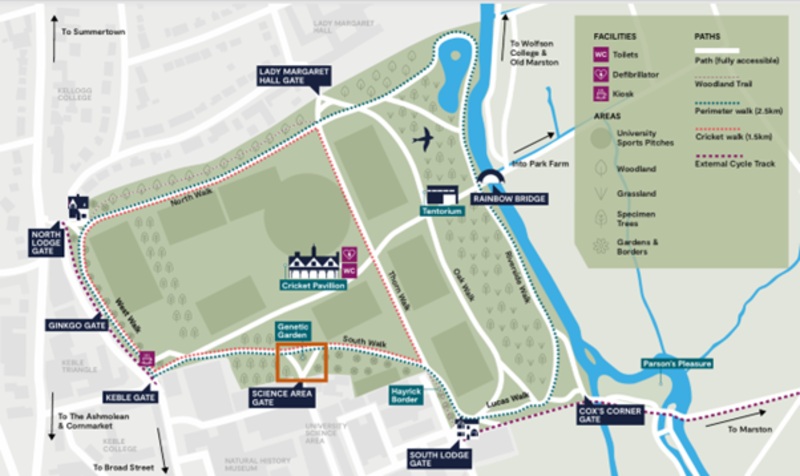
Figure 1: The location of the Genetic Garden in the University Parks
The first three Genetic Gardens
The first Genetic Garden was planned and set out by Professor Cyril Darlington (1903-1981), a botanist, cytologist, geneticist, eugenicist and polemicist, who was controversial in all of those areas. While the Genetic Garden is about science and not about Darlington, it is not possible to consider its importance in the absence of its provocative founder.
Darlington accepted the Sherardian Chair of Botany at Oxford University in 1953. He started thinking about creating a Genetic Garden almost as soon as he arrived. Having been refused permission to use the Oxford Botanic Gardens, the first Genetic Garden was designed and planted in 1957 in the gardens of 9/10 South Parks Road, with the help of the late Ken Burras, then Superintendent of the OBG. Plant lists in the University Archives show collections of bulbs, herbs, shrubs and other perennials, illustrating some of the early questions explored in plant genetics, like variegation in annuals, nuclear mutation, and fasciation (malformation of stems and flowerheads). It was developing well when the University decided to demolish the houses to make way for the Tinbergen Building.
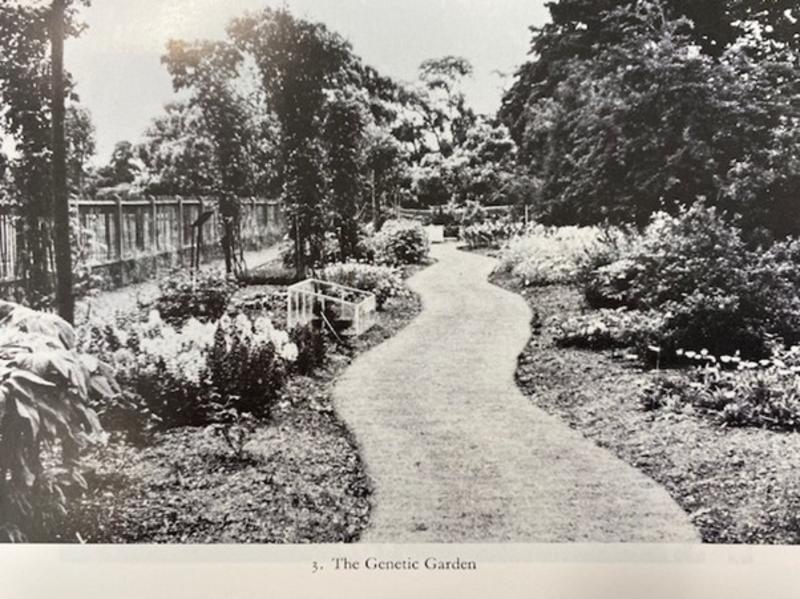
Figure 2: The first Genetic Garden (1953) at 9/10 South Parks Road from Darlington, C and K Burras (1971), Guide to the Oxford Botanic Gardens, Oxford, centrespread
Darlington approached the Curators of the University Parks about relocating the garden, and, after some negotiation, the Curators agreed to surrender a tennis court at the back of the Botany glasshouse range in the Science Area. This was immediately fenced off, to be accessed only from the Science Area and used only for teaching. It was planted in 1964, and maintained by Botany. This ‘second’ garden was laid out in formal beds, rather more like a laboratory, with groups of plants arranged in relation to questions of interest for teaching and research.
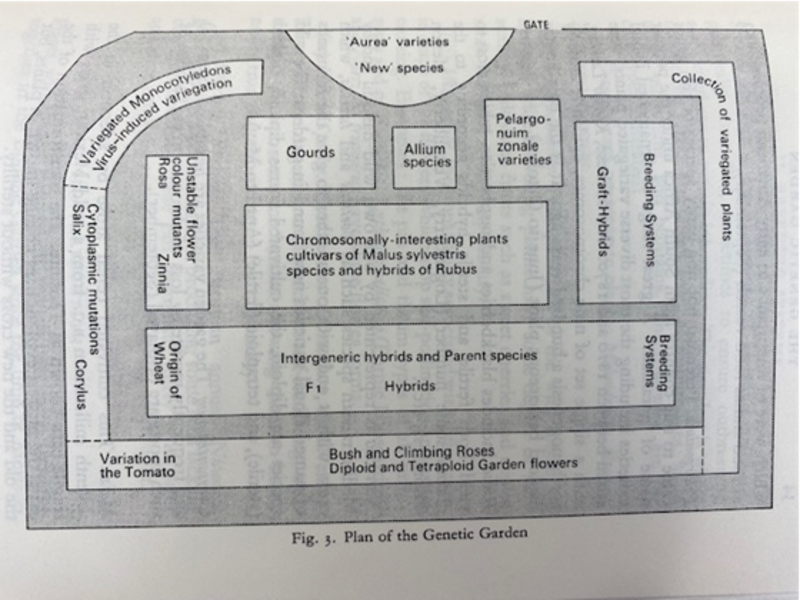
Figure 3: The Genetic Garden in the University Parks (1964) from Darlington, C and K Burras (1971), Guide to the Oxford Botanic Gardens, Oxford, p.33
Darlington frequently referred to the Genetic Garden as one of the Oxford Botanic Gardens. At OBG’s 350th anniversary, he said ‘Since the celebration of the 300th anniversary in 1921, the Garden has been doubled in size, and two new gardens, the Genetic Garden and the Nuneham Courtenay Arboretum, have been added to it.’
Following Darlington’s retirement, and during a period of financial stringency, teaching in the Genetic Garden stopped. This obviated the need for maintenance by Botany, and the site was returned to the University Parks, where its purpose was lost.
In 1998/99, the then Sherardian Professor, Hugh Dickinson, and the Superintendent of the Parks, Walter Sawyer, began work to replant – and save – the garden. This ‘third’ garden was laid out in an informal style, with a view to its aesthetic qualities delighting all visitors to the Parks. The mature trees and shrubs from 1964 were retained, and herbaceous plants and bulbs from Darlington’s 1964 scheme were reintroduced, along with the inclusion of new species. The forked path that links the Science Area with South Walk in the University Parks was also built.
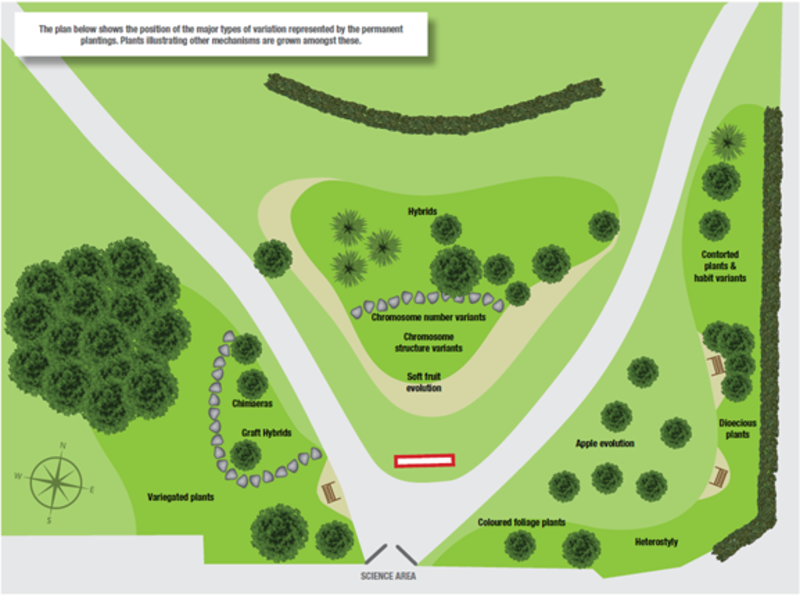
Figure 4: The revised informal plan of 1998 in the University Parks
The fourth garden
Within twenty years, the Genetic Garden was again a forlorn corner of the University Parks, its sense of forgottenness accelerated by the absence of maintenance during the Covid lockdown.
In 2021 the Curators of the Parks agreed a proposal for its regeneration. An advisory group of eight senior scientists was assembled in 2023. Over two years, the group met with the Superintendent to plan a new and scientifically relevant garden. It was agreed that the primary objectives should be teaching, dissemination and public information, including for children, and beauty remains important.
Work on clearing and replanting started in February 2026, and the project is expected to take two years to complete. As the garden matures, undergraduates and visitors will be able to learn interesting facts about hybridisation and plant breeding, genetic variation and the environment, grafting, and how plants can still survive when things go wrong.
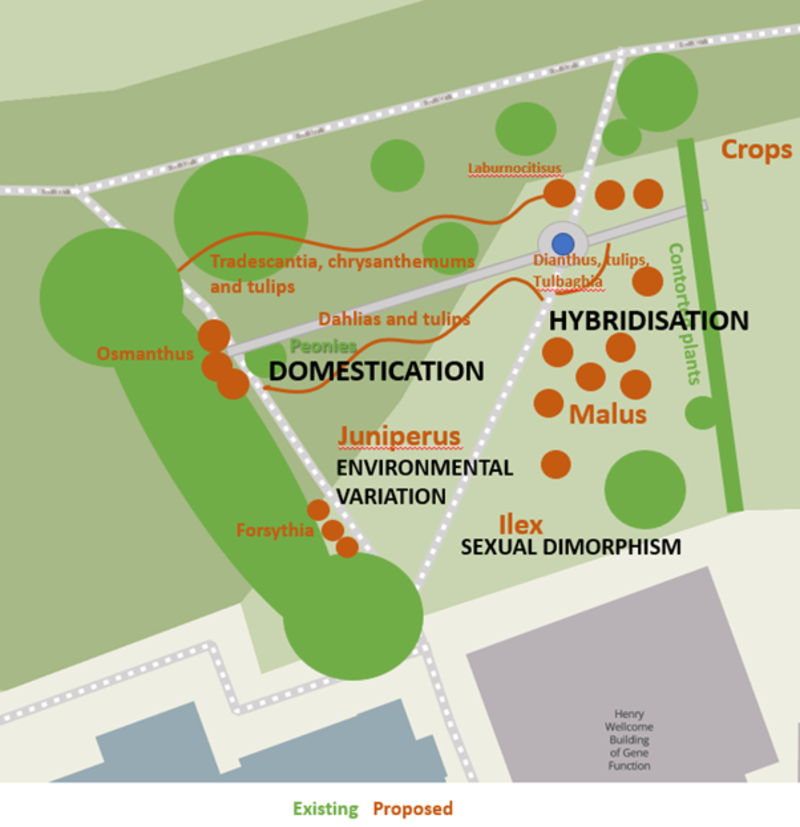
Figure 5: The new proposed layout 2026
But the collection in the new Garden will tell stories beyond genetics associated with the wider University. Grafted plants open up a connection with the Oxford Botanic Gardens, whose first head gardener was Jacob Bobart, a German botanist credited with developing the method for grafting both vines and trees. The Tradescantia collection unlocks the story of the Ashmolean Museum: the Tradescants were plant hunters who explored North America, and their collection of rare and strange objects was acquired by Elias Ashmole, who gifted it to the University.
The Parks Team will now care for the Genetic Garden plant collections in dialogue with teaching departments, so that the Garden remains relevant to scientists and beautiful for visitors.
Postscript
When the land that makes up the University Parks was purchased in 1863, the intention was to establish a science museum and teaching facility, as well as to secure a place of sport and recreation for the University community. It has always been open to the wider community for recreational use.
The re-establishment of the Genetic Garden contributes to realising something of the initial purpose as a place for the teaching of science. It will no longer be fenced off for the exclusive benefit of botanists, but open to all, to communicate the wonders of plant genetics to everyone who will take the time to learn.
Below are some of the subjects that will be illustrated in the rejuvenated garden:
Hybridisation and plant breeding
Malus (apples) on different rootstocks will demonstrate plant breeding and grafting. Crops like wheat and barley will demonstrate changes over time as breeding has improved yields.
We will include hybrid plants planted next to their two parents, for example, Forsythia x intermedia and its two parents F. suspensa and F. viridissima as well as the Osmanthus hybrid, O. x burkwoodii, and its two parents O. delavayi and O. decorus. With osmanthus, it is possible to see the intermediary at all stages, while in forsythia, the intermediate characteristics are seen at leaf and flowering stages.
Dianthus were early candidates for hybridisation, using Sweet Williams, Dianthus barbatus, and carnations, Dianthus caryophyllus. The Oxford University Herbaria has the first 1717 hybrid, which was a milestone in plant breeding.
Tradescantia is an interesting genus, not least because it was an early (pre-1940s) model for the investigation of interspecific hybridisation, introgression (the transfer of genes from one species into the gene pool of another through repeated hybridisation) and chromosome segregation.
Genetic variation and the environment
Ecogeographical variation in junipers will illustrate variation in the sizes of mature plants.
Sexual dimorphism
This is the condition where different sexes of the same species look very different. We will illustrate this with variegated holly, where male and female flowers are on completely different plants, which look very different and yet are genetically the same species. This feature gave rise to an interesting quirk in the naming of hollies: Ilex ’Silver King’ is female while I. ’Silver Queen’ is male; in the golden variety the name reversal also occurs.
Domestication
Dahlias, chrysanthemums and tulips all show a massive range of variation, all selected from the wild form, but now showing little resemblance to the original wild forms. A significant advantage in planting dahlias and chrysanthemums is that they flower early in the Michaelmas term, so are well-timed for teaching undergraduates. There is also good herbarium material, which is also useful for teaching Botany.
B chromosomes
B chromosomes are additional (or supernumerary) chromosomes that are not essential for the survival of a species, found in some plants, fungi and animals (including all mammals). Although B chromosomes do not carry essential genes, they can influence the genetic characteristics and adaptability of the organisms that possess them. We will illustrate these effects using chives, Allium schoenoprasum and Tulbaghia violacea.
When things go wrong
It is interesting what plants can do and still survive when things go wrong. This is illustrated by both variegated and contorted plants.
Chrysanthemums
Chrysanthemums, in the family Asteraceae, are herbaceous perennials that bloom in the autumn. They are native to East Asia, particularly China, and north eastern Europe. They have been in cultivation for over 3000 years, and many thousands of horticultural varieties and cultivars exist.
The following varieties of hardy Chrysanthemum have been planted in the garden to illustrate just a part of the huge variety of forms and colours that have resulted from centuries of plant breeding.
|
Name |
Colour |
Height |
Spread |
Flowers |
Type of flower |
|
Anne Ratsey |
Lemon |
1.12 |
Med |
Late |
Single sometimes petals revert to pink |
|
Apollo * |
Orange |
1.00 |
Large |
Mid/late |
Semi double |
|
Bitte chokade |
Dark red |
0.80 |
Slower |
Mid |
Small semi double |
|
Burnt Orange |
Orange, yellow spoon tip |
1.00 |
Slower |
Late |
Single spider |
|
Capel Manor |
Shaggy yellow |
1.20 |
Medium |
Late |
Semi double larger |
|
Carmine Blush |
Mid pink |
0.50 |
Medium |
Late |
Single |
|
Chelsea Physic |
Dark red backed gold |
1.00 |
Medium |
Very late |
Semi double |
|
Clara Curtis |
Pink |
0.50 |
Medium |
Early |
Single |
|
E H Wilson |
White cream |
1.00 |
Slower |
Mid |
Small semi double profusion |
|
Emperor of China |
Pink |
0.80 |
Slower |
Very late |
Double slightly quilled, autumn colour |
|
Folksong |
Yellow |
1.00 |
Slower |
Mid |
Double medium flower scented |
|
Gelbe spinne |
Lemon |
0.80 |
Slower |
Mid |
Semi spider |
|
Golden greenheart |
Orange green eye |
0.80 |
Medium |
Mid |
Semi double |
|
Heda |
Brick red |
0.80 |
Large |
Late |
Single |
|
Helen Ward |
Brick red |
0.80 |
Medium |
Late |
Semi double |
|
Hillside Apricot |
Apricot |
0.80 |
Medium |
Mid |
Single medium size |
|
Jessie Cooper |
Magenta pink |
0.80 |
Medium |
Late |
Single |
|
Jessie Cooper 2 |
Brick red |
1.00 |
Medium |
Mid |
Semi double |
|
Julie Gravere |
Dark red |
0.45 |
Compact |
Mid |
Double pompom |
|
Mary Stoker |
Apricot |
0.80 |
Medium |
Mid |
Single |
|
Mavis Smith |
Pink |
1.30 |
Large |
Mid |
Single large and some quilling |
|
Nantderry Sunshine |
Lemon |
0.45 |
Medium |
Mid |
Double pompom |
|
Neue Kokarde |
Yellow and red rosettes |
0.80 |
Slower |
Mif |
Named after rosette on Napoleon’s hat |
|
November Sun |
Bright yellow |
1.12 |
Medium |
Very late |
Anemone centred |
|
Old Norwell |
Pale brick red |
1.00 |
Medium |
Late |
Semi double |
|
Poesie |
White |
1.12 |
Medium |
Mid |
Semi double |
|
Pomegranate |
Dark red |
1.12 |
Med |
Mid/late |
Double densely packed petals |
|
President Osaka * |
Bright yellow |
0.45 |
Compact |
Late |
Very small bright buttons of colour |
|
Ruby Mound * |
Rich dark red |
1.00 |
Medium |
Mid |
Semi double |
|
Ruby Raynor |
Old gold |
1.00 |
Medium |
Early |
Double medium flower |
|
Rumpelstilzchen |
Red |
0.60 |
Medium |
Early |
Double |
|
Sweetheart * |
Peachy pink |
1.00 |
Slower |
Mid |
Double |
|
Tapestry rose |
Darker pink |
0.80 |
Medium |
Mid |
Single |
|
Topsy |
Orangey red |
0.50 |
Medium |
Mid |
Double |
|
Uri |
Mid pink |
1.12 |
Medium |
Mid |
Single |

